Why people are terrible at sales and what to do instead?

Why people are terrible at sales and what to do instead?
Why people are terrible at sales and what to do instead?

People think marketing and selling is something that to do it, a person needs to be an extrovert, sleazy or greedy.
And you don’t have to push people to buy if you know how to do it correctly. People fail at sales and marketing because they something terribly wrong.

You should not make those costly mistakes.
In this short podcast episode, you are going to learn why people fail at sales and what to do to be great at sales?

Right-click here to save this episode.

What happens when you call a taxi.
The taxi arrives and the driver asks you where to go. You tell him the destination. The driver takes you to the place where you want to go. And it’s precisely where you want to go. The driver doesn’t only fulfil your wish. He makes sure that you reach your destination as quickly as possible and as safely as possible. He takes responsibility to get you to reach your destination. And he takes money in exchange for the service he provides.

You know I didn’t say anything extraordinary.
Think about selling and earning money. Whatever you sell, you have to do the same tasks as the taxi driver does. It’s nothing complicated. You need to take people to where they want to go or to be. People think marketing and selling is something that to do it, a person needs to be an extrovert, sleazy or greedy. It’s not that difficult to figure out. In one of my courses on ‘Pitch design course’ where I help students to design their sales pitch, some of the most introverted and shy people learn how to design the sales pitch and deliver the sales pitch confidently without looking greedy or pushy salesman. The students learn the right structure of the pitch and the sequence to deliver the pitch.

You too can sell if you know that.
It doesn’t matter if you are introverted or shy, you too can sell without pressure if you know how to do it. I have seen people failing at sales and there is something that they do wrong. In this short podcast episode, you are going to learn why people fail at sales and what to do instead? Let’s dive in.


Which is the biggest chocolate making company in the world?
If you think of ‘Mars Wrigley Confectionery’ from Chicago, USA, you are right. The second biggest company is Ferrero Group from Italy. Almost everyone loves chocolates. My daughter, Aarna and my wife, Dhruvi, love chocolates at any time.

It’s so good that even the creator of the product wants to consume too.
The people who make chocolates at Mars and Ferrero might also love what they make. But they are not interested in eating the chocolates they make. They love what they create but they love to get people to consume. They sell to people they don’t even know yet, they know what people love to have and deliver what people love to have.

People fail at selling because they do exactly the opposite to it.
You don’t have to be too much in love with your product/service. If you are terrible at selling it’s because you are not in love with your client or customers. Now, I am not talking about being romantic with your customers.

If you look at the website of Ferrero, you will know how they love their customers.
When they sell one of their products called, ‘Kinder chocolate’, they say, “A little a lot. We love all the little moments. For kids, moments are never little especially when shared with you.”  Look at the way they promote their another great product called ‘Nutella’. They say “We spread positive energy in families to bring more optimism to the world”. Hey, they didn’t say, we sell chocolate spread. The biggest chocolate making brand called ‘Mars Wrigley Confectionery’ also says the similar.

If you go on their website, it clearly says,
“When you make brands that put smiles on people’s faces and create better moments for millions, you feel a sense of pride in your work. Today, our iconic products like M&M’S, SNICKERS, ORBIT, EXTRA and Skittles are enjoyed in more than 180 countries. We’re not just committed to our consumers, we’re focused on positively impacting the planet and the population.”

That’s what you need to do.
You don’t need to be in love with your product/service. You must put your heart and soul when you create your product or service but you also need to keep the best interest of your customers in your heart. This is not with only the two brands that we talked about. You will find the same with all the great companies in the world. Here’s another good example I saw on the internet of a lawnmowing service. Instead of selling lawn-mowing services, sell a clean lawn that’s the envy of the neighbourhood.

You need to sell the new identity and how can you do it?
You are not selling any product but you sell the confidence and the new self-image every time you sell. The restaurant doesn’t sell food, they sell the elegant dining experience. Coca-cola doesn’t sell sugar drink, they sell happiness. Check out Coca-Cola’s ads and you will find out.

One of my clients is a fashion designer and she never says that she designs and sells clothes.
Her target customer is overweight women of more than 30 years of age. Instead of saying designing the clothes, she says that she makes overweight women look good. An overweight woman worries about ‘not having a super-model figure’, but she can make them look good with her art of designing the clothes. She sells a new self-image, charisma and confidence instead of just dresses.

Stop loving your product and service.
Instead, start loving your customers. You need to love to create and deliver what customers want. And you care more when you do something for the people you love. That’s why I love doing episodes on this podcast channel ‘Love Your Business’.

The One-Liner Report:

Why Customers Don’t Listen? – How to get them to listen to you with your One-Liner?

This report will show you how to explain your business in just one-line so that your customers listen and understand you as quickly as possible. Click on the button below and get a detailed ‘The One Liner Report’. It will take only 15 minutes to read.

Why going slow is good even if the others around you going fast?

Why going slow is good even if the others around you going fast?

Why going slow is good even if the others around you going fast?

going slow

How can going fast slow you down, and how can going slow get you ahead of others?
You need to slow things down to make your journey to your goals smoother.

In this podcast, you will know some of the scientific and historical studies that show why and when you need to go slow.
By the end, you are going to learn how the top performers don’t manage their time but manage their energy.

Right-click here to save this episode.

Do you know who reached the south pole first?
There were two men who were racing to reach the south pole in Antarctica in 1911. One was Roald Amundsen from Norway and another one was Robert Scott from the UK. They both were leading their teams. In fact, both reached the south pole. But Roald Amundsen reached 34 days before Robert Scott.

But there was a tragedy.
Robert Scott and his 4 teammates died on the return journey. They were only about 18kms from their food depot. They both were equally determined to reach their targets but their strategies were different. Scott took ponies for the journey and because ponies can not sustain cold, he had to wait for the weather to get warmer. He also used 3 motor sledges but they broke down. Also, they did not get enough food and nutrition, and due to the deficiency of Vitamin C, they suffered from scurvy disease.

Amundsen was clever.
He used dogs on the journey because dogs can sustain more cold. Amundsen left 11 days earlier than Scott. Instead of relying on vehicles, he made sure that his team knows how to ski well. On the contrary to Scott’s team, Amundsen’s team gained weight.

What made Amundsen reach faster?
Amundsen was moving 24-30 kms a day at a constant speed. He didn’t move further even if the weather condition is good. On the other hand, Scott was travelling more in a day when the weather was good but he travelled for amount 70 kms a day. As a result, the ponies were getting tired and could not travel more the next day due to tiredness. So, sometimes Scott was covering really long distance and sometimes he could not cover much distance. So, his pace was fast but inconsistent. Amundsen’s pace was slower but consistent.

In this short podcast episode, we are going to find out why should you go at a slower pace.
Not only going slow is smooth. Your smooth pace will eventually get you ahead of others. This is what you can learn from the American Navy Seal, which is one of the best special armies. They never run. They move ahead firmly but slowly and achieve their target a lot quicker. It’s a lot quicker than other army troops who have to sprint around. 

There is a piece of complete baseless advice thrown away by some motivational speakers and business coaches.
They ask to grow 5X-10X. Get unlimited leads. Get 100s of clients. We are programmed to believe that we have to grow faster and faster than anyone else. We are always asked to run faster and faster. Eventually, we end up who we talked about like Scott in pursuit of reaching the south pole. We don’t have to set a too high target that drains us. 

There is a famous example shared by Jim Collins.
In his book ‘Great By Choice’, Jim Collins shared a good example. In the 1980s, the computer chip maker AMD set a very bold target of achieving growth by 60%. To get that goal, they borrowed heavily. They thought that everything will work well if we keep running around as per the plan. 

But many times, the plans go wrong.
They didn’t achieve according to their plan and they had to pay off the debt quickly. The debt was mounting fast too and exponentially. Instead of 60% growth, they were burdened with a lot of liabilities. They nearly got bankrupted. Finally, the firm and steady and slow player in the market called ‘Intel’ took over the company who was going fast but was out of control.

So the question is, should you go faster or slower?
Well, it’s kind of a mix of both. Let’s understand. In the world war, Hitler used the Blitzkrieg strategy. It means, attack in a short time and extremely powerfully. It gave no time to the enemy to respond. Going fast is beneficial but it’s not useful in the longer run. Because it consumes a lot of energy. And as a result, even a smaller mistake can cost you a lot and completely get you off the road.

You can rush but strategically.
Hitler knew it so he used the blitzkrieg technique to get in the enemy zone to destroy them. Along with that, he also had a cauldron battle strategy. It means, covering the smaller group of enemies when they are on backfoot. This cauldron battle strategy is going slow and steady. Now, should you go at a slow pace or fast pace? Let’s find out. 

Marathon runners know it well.
In a marathon, the runner needs to learn to pace themselves. They need to keep a constant speed even if they don’t feel tired. They have to control their temptation or urge to go faster.

During the training period, they need to understand their body.
They are told to slow down when they get exhausted. They are supposed to run without huffing and puffing. They have to go slower than their best speed. Their training is interesting and can be applied in our life too. During the training, the new runners are asked to run their first mile as fast as they can. Then, they are asked to run 2 to 3 minutes slower than their fastest pace.

You can apply the same formula.
You need to go slower than your best speed or top-most speed. It means, doing things without struggle and pain. Good team leaders and business people, always plan for more time for their work and project than it requires. It helps them and their team to maintain their energy and don’t get exhausted.

So, let’s summarise in short.
We don’t have to run around faster than we can. It will burn you out. Even a small mistake can put you in big trouble if you are rushing to get to your target. Go ahead like the American navy seals. You will go far with a steady consistent pace. If you rush, rush and rush just because some motivational speaker told you to do so, you will be tired and have no energy left to get you back on track. 

You need to know your highest pace.
Then you need to slow down from your highest pace. Know your capabilities and manage your energy. Top performers don’t manage their time but manage their energy.

The One-Liner Report:

Why Customers Don’t Listen? – How to get them to listen to you with your One-Liner?

This report will show you how to explain your business in just one-line so that your customers listen and understand you as quickly as possible. Click on the button below and get a detailed ‘The One Liner Report’. It will take only 15 minutes to read.
How to learn anything in 3 steps in the quickest time?

How to learn anything in 3 steps in the quickest time?

How to learn anything in 3 steps in the quickest time?

learn anything

We have tried many times to learn lots of things but we are unable to learn in the shortest amount of time.

So, how to learn rapidly without compromising the understanding of the subject.
In this podcast, you will be amazed at how a seemingly simple technique can speed up your learning process. You will not only be able to learn but also be able to implement what you will learn.

Right-click here to save this episode.

What if you can remember everything even after 20 years?
I mean everything! Well, in the case of dolphins, they can remember the whistle sound of another dolphin even after 20 years of separation. Dolphins are not only one of the animals with the best memory.  They are also one of the smartest animals on the planet. Land Animals, such as Elephants, Chimpanzees and dogs have similar abilities but they haven’t been tested. In birds, Ravens and Parrots are good at remembering for a long time. Sometimes, animals can deal with memory tests much better than some humans.

We, humans, have poor memory due to ignorance of brain exercising.
Mental capacity allows people to achieve great results. If you can learn and remember faster, you can do better things quickly. People avoid learning because they find it difficult to learn. What if you can supercharge your learning and become smarter?

In this podcast, you are going to learn the Feynman Technique. It’s the best way to learn absolutely anything.  The Feynman Learning Technique is a simple way of approaching anything new you want to learn. Why use it? Because learning doesn’t happen from skimming through a book or remembering enough to pass a test.

Information is learned when you can explain it and use it in a wide variety of situations. 
You can give yourself a tool to use for the rest of your life. The interesting thing is that the more you know, the fewer surprises you will encounter because most new things will connect to something you already understand. Ultimately, the point of learning is to understand the world. But most of us don’t bother to deliberately learn anything. We memorize what we need to as we move through school, then forget most of it. In this podcast, you are going to learn 3 key steps of the Feynman Learning Technique, based on the method Richard Feynman originally used. The steps are as follows:

  1. How you can learn in the fastest way by teaching others?
  2. Identify the gaps
  3. Organise and simplify

1. How you can learn in the fastest way by teaching others?
How a rubber duck at your desk can help you learn quickly? Richard Feynman explains this well. This first step is crucial and it will make your learning faster than any other learning techniques. 

Take out a blank sheet of paper.
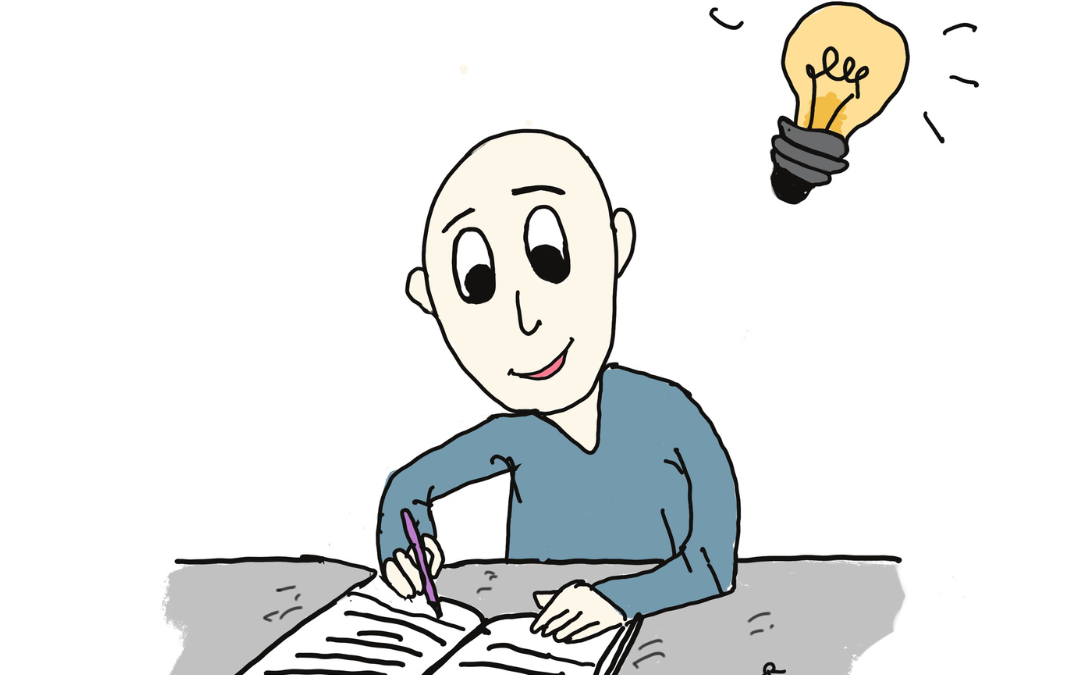
At the top, write the subject you want to learn. Now write out everything you know about the subject as if you were teaching it to a child. You are not teaching to your smart adult friend, but rather a child who has just enough vocabulary and attention span to understand basic concepts and relationships. Also, you could place a rubber duck on your desk and try explaining the concept to it.  Software engineers sometimes tackle debugging by explaining their code, line by line, to a rubber duck. The idea is that explaining something to a silly-looking lifeless will force you to be as simple as possible.

We make a big mistake when we try to explain to others.
|We use complicated vocabulary and jargon. You don’t need to do it. The truth is, if you can’t define the words and terms you are using, you don’t really know what you’re talking about. Humans understand better in the simplest language.  We hate to be confused.  Many times, we even confuse ourselves by using complex words. You need to make sure your explanation isn’t above, say, a sixth-grade reading level by using easily accessible words and phrases.

The simplest language is the best language to learn and teach.
When you write out an idea from start to finish in simple language that a child can understand, you force yourself to understand the concept at a deeper level and simplify relationships and connections between ideas. You can better explain the why behind your description of the what.  Now, we move on to the next step.


2. Identify the gaps
I asked for guidance for the location I wanted to go to and I got lost completely. In the year 2011, I was visiting the city of Mumbai by car. I had to reach a training venue on time. I am not familiar with the locations of Mumbai because I don’t live there. I tried to google the location but it was not showing anything precisely. Back then, the google map was not so sophisticated and accurate. I had to rely on the locals. Well, when I asked people to guide me from point A which is where I was to point B which is where I want to be. That means my hotel. He explained to me, I took notes and I followed his advice.

I got completely lost and reached a whole different area.
While that local person was guiding me, he missed crucial locations where I had to take important turns and exits. He missed many landmarks and He lost me completely. My time was wasted and I almost got late by 15-20 minutes for the event. That’s exactly what we do when we explain. In the first step, we talked about explaining the concept with simple vocabs and generate relationships between ideas that a child can understand.

But it’s not enough.
There are some areas where you struggle in Step 1 are the points where you have some gaps in your understanding. Identifying gaps in your knowledge—where you forget something important, aren’t able to explain it, or simply have trouble thinking of how ideas are connected. It’s a critical part of the learning process.  Filling those gaps is when you really make the learning stick. Now that you know where you have gaps in your understanding, go back to the source material. Find more supporting ideas. Find out how those ideas are connected with each other with the consequences of each. Look up definitions. Find more synonyms.

Keep going until you can explain everything you need to in basic terms.
You can add more stories and examples to strengthen your explanation. Sometimes, you need to rearrange ideas and easily combine them with other words to communicate your point. When you can say something in multiple ways using different words, you understand it really well. Missing this step will create the illusion of knowledge. And you will be challenged with arguments and questions. And many times, it’s good so that you know the gaps in your understanding. It’s good to know what you don’t know. That takes us to the third part. Let’s dive in.


3. Organise and simplify

I have been cooking food for the last 17 years. And I love it.
I remember the first few times, I was making food. I was asking people to share the recipe. Well, they are so kind enough to tell me the recipe but the outcome was not as I expected. The final product was so much different than they make. What was wrong? They used to tell me the recipe like they were assuming that I know exactly what they know. They were telling me all steps correctly but they were in the wrong order. Instead of going from 1st to the 2nd to the 3rdand so on to the 10th step, they used to tell me let’s say, 1st step then the 4th step, then 7th step and then the 2nd step and so on. You know how I did. That’s why I couldn’t cook as delicious food as them.

That’s the right way to confuse others.
You don’t have to do it when you learn by explaining or teaching others. After step -1 and step-2, you now have a set of hand-crafted notes containing a simple explanation. Organize them into a narrative that you can tell from beginning to end. Read it out loud. If the explanation sounds confusing at any point, go back to Step 2. Keep repeating until you have a story that you can tell to anyone who will listen. If you follow this approach over and over, you will end up with a binder full of pages on different subjects. If you take some time twice a year to go through this binder, you will find just how much you retain. You are going to learn way much more and way much more quickly than others.

The ultimate test of your knowledge is your capacity to convey it to another.
You can read out directly what you’ve written. You can present the material like a lecture. You can ask your friends for a few minutes of their time while you’re having dinner with them. You can volunteer as a guest speaker in your child’s classroom or a friend’s place. All that really matters is that you attempt to transmit the material to at least one person who isn’t that familiar with it. The questions you get and the feedback you receive are invaluable for further developing your understanding.

Pay attention to what your audience is curious about.
Note down what they ask and where they get confused. Fill up those gaps of understanding. The Feynman Technique is not only a wonderful recipe for learning but also a window into a different way of thinking that allows you to break complex ideas apart and reconstruct them from the ground up.

Not only will you supercharge your learning, but you’ll also supercharge theirs.

The One-Liner Report:

Why Customers Don’t Listen? – How to get them to listen to you with your One-Liner?

This report will show you how to explain your business in just one-line so that your customers listen and understand you as quickly as possible. Click on the button below and get a detailed ‘The One Liner Report’. It will take only 15 minutes to read.
How to make sure you don’t lose your focus and concentration?

How to make sure you don’t lose your focus and concentration?

How to make sure you don’t lose your focus and concentration?

concentration

No matter how much we practice and how hard we work, we lose our focus when we need to hit our target.
We make mistakes at the last minute. Sometimes, We are good at doing things that are difficult to do for most. On the other hand, we struggle with things that are quite easy to do for most.

In this podcast, you will find some of the best techniques used by world champions to be focused when it really matters.
You will find them helpful. Listen to this podcast.

Right-click here to save this episode.

Matthew Emmons is known as one of the best shooters in the history of American shooting.
Across his 23-year career, the four-time Olympian has won numerous titles, including one gold, one silver and one bronze at the Olympic Games. Also, a gold and bronze medal at the World Championships.

But he might be better known for the Olympic gold medals he didn’t win than the one he did.
In 2004, at the Olympics held in Athens, he won the gold medal in shooting the rifle in 50 meters prone position. Emmons was well on his way to win another gold in the three-position rifle event – where the athletes shoot the rifle while kneeling, standing, and from a horizontal position. He was ahead by 3 points. 

Then, the unthinkable happened.
He lost his focus and fired on his competitor’s target in the lane next to his! Emmons scored zero on his final shot after misfiring at another competitor’s target. He blew the three-point lead, dropped to eighth, and Emmons came in eighth! 

This is just the beginning of his final shot curse at the Olympics.
Things started going ugly. He again was ready to win the gold medal in 2008 during the Olympics in Beijing. But instead of winning it with ease, Emmons lost his rhythm and shot his rifle a split second early. One second error again led to Emmons missing the gold – again! Giving away two Olympic gold medals put Emmons under a tremendous amount of pressure. He even looked for the help of psychologists to help him keep calm.

But things would only get worse.
At the London 2012 Olympics Games, Emmons reached the Olympic men’s 50m rifle three-position final for the third time. But once again, he made mistakes and had to settle for the bronze medal.

How a person who is so much experienced and really one of the best at what he does can do such mistakes?
It’s a dream of almost all sports players to play and win in the Olympics. But Emmons lost the opportunity of winning a gold medal. Not only one but three times. We work hard day in and day out. We want to make sure we also hit the target and get the rewards.

But it’s hard to focus when we really need to.

We can see that the deadline is coming closer but we can’t just sit and focus. And we struggle to do the required work. We somehow finish but we know we could’ve done better.

Many times, we just can’t concentrate and we give up.
And they keep delaying the deadline. We give up when we can’t just win. We goof up when there is the time we really need to perform with focus. We make silly mistakes after hundreds of hours of practice. It’s embarrassing and sometimes it’s heartbreaking.

So how to make sure you don’t lose your focus and concentration?
Let’s find out how can you stay not only focused but also make sure you hit your target without stress. In this podcast, we are going to discuss three things.

  1. How reminders can help you?
  2. Why concentration is not about focus and what is it all about?
  3. How short term high stress can help you get focused on the long-term

When Serena Williams beat her sister Venus Williams in the Wimbledon final in 2002, she was asked a question: “What was she reading when she sat down between games?”
Serena answered that she had written down a few instructions like “stay low” and “hit in front”. Those instructions kept her focused. Those instructions were reminding her to focus. Constant reminders can help you concentrate. You can extend your focus by constantly and mindfully reminding yourself what to focus on.

There is a similar technique I find very helpful.
I found it from US Army Special forces. They are taught something really good to keep them sharp and focused on their work. During their gruelling 16-hour training sessions, the candidates are told to forget about the whole long day ahead. And instead, just think about focusing on the next 5 minutes. Just do the best you can for the next 5 minutes. That’s it. I used to get distracted a lot. I used to think too forward or backwards. Then I followed this technique of focusing on the task for the next 5 minutes. But constant mindful reminders is not enough.


Shaquille O’Neal is regarded as one of the greatest basketball players of all time.
He was 7-foot-1-inch tall and he played for six teams over his 19-year career in the NBA, National Basketball Association. He won many prestigious awards as a basketball player. But he was not good at simple free throws.Surprisingly the technique of reminders doesn’t work for such an outstanding basketball player. If it were, Shaquille O’Neal would not miss over 5000 free throws! Shaquille was such a dominant basketball player and became one of the highest scorers of the game. And yet, he missed almost half the free throw attempts he made! In fact, he was so bad with free throws that opposing teams made it a strategy to foul him during the ending minutes of the game! Let Shaquille take free throws because he is bound to miss them.

No amount of mindfulness or reminders helped him!
The heat of the moment just made him lose his rhythm! Concentration is not about focus. It’s about rhythm. As Shaquille found out. The more he tried to focus, the less he could concentrate. The players who have always done well with free throws are the ones who have built a natural rhythm and shoot without overthinking!

So how do you build your rhythm?
It’s been found in not only sports but also in any work that if a person is alert and there’s a lot of movement and there’s a lot of going on in his mind and body. If you are loose and relaxed, you would usually play well and get a high score.It sounds counterintuitive. You have to let yourself lose to find your rhythm and become better at concentration. Focus outwards on external action, and not inwards on doubts. This will help you reduce anxiety. And as a result, your concentration will improve.

There is also another powerful way to build rhythm using classical music by Mozart.
Music helps with finding your rhythm. But how? Listening to soothing music activates these parts of the brain, which makes it easier to concentrate! The music of Mozart also makes you calm. Being calm is good but it’s also good to have short-term high stress. Let’s find out in the third and final part, shall we?

Michael Phelps is an American former swimmer and the most successful and most decorated Olympian of all time, with a total of 28 medals.
In the early part of this podcast, we discussed that Matthew Emmons lost his second gold medal. In the 2008 Beijing Olympics, Michael Phelps won the 10th gold medal during the 200m butterfly stroke swimming event. The wonderful part was that Phelps won even though his swimming goggles broke in the middle of the race! It means, his goggles filled up with water during the race.

Breaking of goggles would have broken the concentration of the best swimmers out there! But it didn’t even affect Phelps a little.
Didn’t slow him down even for a second. Do you know why? Because his coach Bob Bowman had deliberately broken Phelps’s goggles plenty of times during practice! Michael Phelps learned how to keep calm during adversity.

If you train yourself in a tougher environment, it will build your strength to keep focused in the tougher time in the future.
In the training environment, you can practice without anxiety. But while playing the game, your anxiety level goes up and a minor setback or accident can distract you easily from the goal. Almost everyone becomes nervous when there is showtime. The famous actors, sportspersons, motivational speakers, political leaders, dancers, singers, music artists….all of them feel anxiety at some level whenever they have to perform where people are watching and judging them.

When the audience expects them to perform well, they feel stressed.
It’s a sudden rush of anxiety. You need to manage these negative emotion. And the most effective way to deal with such performance anxiety is to train yourself in the harshest of conditions so that you don’t suffocate in the heat of the moment. Not because training in harsh conditions will improve your skills but because it will improve how you manage your emotions. That takes us to the end of the third part.


Let’s summarise what we have covered in this podcast.
We struggle to focus when it matters the most. When the time comes to perform at our peak, we lose our focus and we miss the target. In the first part, we found that constant reminders can help you concentrate. You can extend your focus by constantly and mindfully reminding yourself what to focus on. It is necessary for us to remind ourselves because there are not 10-20 but hundreds of things that are fighting with our brain to distract us. We have to battle with hundreds of distractions and reminders can help us well.

Then in the second part, we learned that by being calm and relaxed, we can usually perform well and get the prize.
Find your rhythm, and become better at concentration. If there is too much going on in your mind and body, you will create doubts and anxiety.As a result, you will lose concentration. Then in the third part, we found that the most effective way to deal with such performance anxiety is to train yourself in the harshest of conditions so that you don’t suffocate in the heat of the moment.

Not because training in harsh conditions will improve your skills but because it will improve how you manage your emotions.

The One-Liner Report:

Why Customers Don’t Listen? – How to get them to listen to you with your One-Liner?

This report will show you how to explain your business in just one-line so that your customers listen and understand you as quickly as possible. Click on the button below and get a detailed ‘The One Liner Report’. It will take only 15 minutes to read.

How to increase your focus dramatically with a simple exercise anyone can do?

How to increase your focus dramatically with a simple exercise anyone can do?

How to increase your focus dramatically with a simple exercise anyone can do?

increase focus

We all have extraordinary goals.
Yet, when we start to work, we get distracted by hundreds of things. We go on an endless journey of thoughts. And most of our thoughts are not going in the direction of our plans.

Normally, I can manage to get focused.
And most of my clients don’t have the problem of getting focused. It’s possible after doing an exercise that dramatically increases our alertness.

What should you do to pay complete attention to your work?
I have been teaching an exercise to increase the focus in our Neuro-Linguistic Programming (NLP) training, workshops and consulting practice. Find out the powerful exercise. It will help you.

Right-click here to save this episode.

What happens in our mind as soon as wake up?
As soon as the time we wake up, we should feel light and clear. It’s because you had a good sleep I assume. Or even if you have a bad sleep, you still rested. So, you should feel calm. The reason why we sleep is that we need a rest. We need a break to recharge our batteries. We need to put our mind on a rest. So, we sleep and before we sleep, we hope when we wake up we are fully charged with an inner sense of calmness. So that we can focus and pay attention better.

But that’s not exactly what happens most of the time.
As soon as you wake up, your mind starts the train of thoughts. It takes you on a ride of all the kind of reminders, tasks, people, news, alerts, to-do list and all kinds of emotions. It jumps from one thought to another. It’s a crazy ride. 

There few things that even increases this madness.
You check your phone and start reading the messages. The messages don’t stop. Your mind immediately starts interpreting those messages and create multiple trains of thoughts. Not only that, you start thinking of what are you going to do during the day. What tasks are important? Who do you need to meet? And there is too much to think of. And you feel exhausted by just thinking about things you are going to do. The same goes on throughout the day.

Every day, we battle to stay calm and get focused on things at any given moment.
We wish we have control over what we want to focus on. There are hundreds of things going on during the day. We try everything to stay focused and we lose focus after some minutes or many times, after a few seconds.

There is a powerful exercise that I do that increases my focus and attention dramatically.
About 12 years ago, when I was learning Neuro-Linguistic Programming and hypnosis, I learned a powerful exercise to increase concentration. This helped me incredibly whenever my mind starts running around. A similar but more intense exercise is taught in martial arts training too so that they can pay attention to the minute detail of the opponent’s movement very precisely.

After doing this exercise, you will be able to enter this state of alertness in which you could see everything, hear everything, and be so perceptive that you not only could tell minute differences in people and things around you. After some practice, you will be very, very aware, and very, very connected, to the world around you.

Now, this seems like a bit of an amazing state to be in, and perhaps a lost art.
But, I actually believe that everyone is capable of this. I learned this in NLP and hypnosis as I said earlier. I have been teaching the exercise that I do that increases my level of focus and attention. There are many exercises that I teach in NLP workshops that help in dealing with your mind and emotion better. Let me share one of the exercises that I teach in my NLP workshops here. When you do this exercise, It’s like time has just totally stopped, between one second and the next.

Now, that state of complete clarity, of being totally in the moment, totally aware, seeing everything around you, hearing everything around you, being in connection with the world around you; is a very important state to be in.
It is a kind of altered state. But it’s one of heightened awareness, and it’s something that you’re about to practice so that you have a greater connection to both the outside world and your own intuitions.

Now, the exercise you’re about to do has hypnotic elements in it. It requires all of your focus and attention. And so, if you’re driving a car or operating any kinds of machinery, just stop whatever you are doing and listen to this exercise only when you are ready to focus all of your attention safely on the process of learning this powerful exercise. So, as you’re ready to learn this heightened state of awareness now, just sit somewhere comfortably. Or better still, stand up.


The exercise script:

“And I’d like you to just focus all of your attention on a point, somewhere above eye level. Maybe where the ceiling and the wall meet. Or a corner of the room. And I want you to find a specific point that you can focus ALL of your attention on. So you’re beginning to feel all your focus narrowing down, like a tunnel vision, on this one specific point. Focus on every ounce of your concentration now. Try and make out every little bit of detail that you can get a hold of. Now you’ll realise as you’re doing this, that it actually takes a lot of strain and effort to do this. So when you’re ready, just allow your eyes to relax. Keep looking at that point. But your eyes will begin to soften, and as they relax the muscles in the eyes, you’ll notice that your vision tends to expand. You can see more of the room, that you’re in: Maybe the ceiling, the walls, the corners of the room, the colour of the carpet or whatever the floor is made of. And as you continue to relax with your eyes open, you’ll notice that your vision tends to expand, all the way around you. Allow it to expand, so that you can almost get a sense of knowing what it would be like to see through the eyes in the back of your head. notice, at some point, your breathing just relaxes even more, whilst your vision expands and you’re totally aware of the outside world. As soon as your breathing becomes automatic and calm and relaxed, you can bring your eyes down to normal eye-level only as slowly as you maintain this heightened state of awareness; seeing everything around you. Now as you’re doing this, I’d like you to go ahead and pay attention to your ears.

Now, your ears are like a sonar device. And I’d like you to pay attention to all the little sounds that you can hear. First will be the sound of my voice. Perhaps you can hear some background noises in the house, or outside, in the streets, or in the garden outside where you are. Begin to expand your hearing, so that the more you hear, the more you become aware of your own sight and vision. Vision and hearing blending together.

That’s right. And now, turn your attention towards your feelings. Notice every single movement inside your body. Notice that one of your hands is slightly warmer or heavier than another one..find out which one…maybe your neck is a bit tense …and your legs might be lighter than your body…. pay attention to every single muscle movement in your body….maybe you can feel which muscle is tense and which one is relaxed….

Now allow all of your attention to focus on the three senses at the same time. So you see everything around you. And as you see it, you get a sense of what it would feel like to touch it. And at the same time, you’re hearing the sounds. And all these sensations blending into one.

You’re totally connected to everything around you. If there are people in the room, you can be connected to them also. A sense of total awareness, calm awareness, relaxed awareness. In time, the thoughts inside your mind will stop altogether. For now, just enjoy this state. And know that you can come back to this at any time that you wish to. 


Maybe you are listening to voice in a whole different way.
I want to know from you how you are feeling right now. all of my clients and participants who attend the NLP workshop are doing this exercise whenever they need to be alert and it helps them tremendously. I do it too. I also teach the shorter version of this exercise. That takes only 30-45 seconds to get a similar result.

You need to do this exercise because there are hundreds of things that fighting with each other to get your attention.
Don’t let your work get affected because of a lack of focus. If you need to learn more about such powerful exercises that will give you the power to think and act better by using your mind better, you should attend the next NLP workshop.

The One-Liner Report:

Why Customers Don’t Listen? – How to get them to listen to you with your One-Liner?

This report will show you how to explain your business in just one-line so that your customers listen and understand you as quickly as possible. Click on the button below and get a detailed ‘The One Liner Report’. It will take only 15 minutes to read.
How to know how much is enough to deliver to our clients?

How to know how much is enough to deliver to our clients?

How to know how much is enough to deliver to our clients?

Have you ever experienced that the clients are not happy with what you deliver even if you give more than what they ask for?
Many times clients fire us and show us the exit door. Many times, we have to fire the clients but we don’t do.

How to know what they want from us?
So that both you and your clients can enjoy the professional relationship. Find out in this short podcast episode.

Right-click here to save this episode.

A few years ago, I was abruptly got ‘fired’ from a business.
I was helping them to get the marketing and sales message. It was consulting work. I worked with their team for a while. It was good but something happened unexpectedly. I wasn’t happy about being fired.

But, there was an important lesson I learned.
I gave them the entire structure and system to create a marketing message. Before I joined, It was difficult for them to sell their products. They also asked me to provide support for their other products. I helped them out and told them what is really good about their product and what is needed to improve.

They needed to change their product a little bit.
After looking at the features and benefits of the product, I suggested their team to improve their features. It wasn’t a major change. It required a minor tweak in their marketing message. The head of the marketing department and other members agreed with me. It was long work but it was good. We tasted and we got a good response.

But the owner wasn’t happy with it.
He didn’t like the idea. Even if my idea was better. We tested and got a better response from the market. I found a better idea but not exactly the way he wanted.

As a result, he removed me from the project.
I was helping them out. On the last day, he told me that I haven’t done enough research on the product. In fact, after a small tweak, their customers responded better than before. The message that I helped them to create was impactful. Previously, they spent too much money on advertising and social media marketing. And, I saved their money on digital marketing and showed them how to sell without wasting money on advertising.

It didn’t matter for them.
He was quite obsessed with fancy ads and social media posts that showcase his products on social media. Even if it was not delivering any good result. I have saved his money and time but it wasn’t in the way he wanted.

In his eyes, I have failed.
Some other consultant told him that the only way to reach more customer is to spend more and more money on marketing, PR and advertising. So, I was shown the exit door. I was sad. I kept wondering what I did wrong! Finally, I found the answer.  In this short podcast, let me share with you one of the most important lessons I wish I had learned earlier. Let’s find out.


One day, I was listening to an audiobook in my car.
At one point in time, the author said something about value. Value is in the eye of the beholder. It doesn’t matter what value I perceive I bring to a relationship, whether it’s personal or business. What matters is what the other person in the relationship sees as bringing value.

We don’t look at something in the same way.
Some look at Apple’s products as over-expensive products whereas some people look at it as something cool and outstanding products. No one is right or wrong. It’s just the way we perceive.

We sometimes get so excited to help people where we don’t need to.
I did the same mistake a few times.  If I don’t deliver what the other person believes they need, regardless of what other things I do, then I am not providing them with any value. When you next talk to a business client, ask them for some feedback on how much value they expect you bringing to them. The answer may surprise you.

We don’t need to serve every single client.
We don’t need to be too hard on ourself. Sometimes clients are just not worth it. In many cases, we end up working with the worst clients. We might come up with the exact solution they are looking for but I guarantee they would complain about why we hadn’t done anything. It’s good to remove them.

Many times our clients don’t want us to help them.
Yes, it’s true. I met some clients who look for validation. It means, they just want to get the approval of what they believe is right. If our practice or philosophy doesn’t match with them, they would see us as an enemy.

It’s sad to lose a client.
But it seems like every time I lose a difficult student a better one shows up. I think it is important not to get into a mindset of scarcity when it comes to clients. There are hundreds of people you can choose as your clients.

Ultimately, you and your client should enjoy a professional relationship.
You need to get to decide what kind of product or service you want to deliver and who you want to work with. Business is all about serving with someone you can enjoy working with. You can’t give value to someone who doesn’t understand it.

So, there are two things you learn from this short podcast.

  1. We need to know what ‘value’ is desired by our clients. We need to know exactly what our customers want. And deliver what they want.
  2. We need to decide that sometimes what they require and what we get joy from providing, do not line up.

That takes us almost to the end of the podcast. Lastly, I would like to share my personal experience. It’s something that from my own life.


Two years ago, my wife, Dhruvi, was looking at some of our old photographs on my computer.
She wanted to print some of the photos she liked. She was too busy to get those photos printed. So, I offered her my support. I decided to print for her. I even did something extra. After getting all those photos printed, I bought a very good photobook and put all photos in. I also put some photos that I thought she would like.

I wanted to make my wife, Dhruvi, happy. But she wasn’t.
No. She was not happy. She just wanted photos. And the photos that she chose. She didn’t want more photos that I thought she would like. She didn’t want photobook. She took those photos out of the photobook and gave that empty photobook back to me along with the photos that I chose.

I was a little bit upset.
I spent so much time and put extra efforts to make it look good. After all, I wanted to surprise her and make her happy. But I understood that she was also right. It was her choice, not mine.

I was overjoyed to do the work the way I wanted to, not the way she wanted me to do. I didn’t pay attention to what she wants. That’s the good lesson I learned.

The One-Liner Report:

Why Customers Don’t Listen? – How to get them to listen to you with your One-Liner?

This report will show you how to explain your business in just one-line so that your customers listen and understand you as quickly as possible. Click on the button below and get a detailed ‘The One Liner Report’. It will take only 15 minutes to read.